It's a wonder to me*
The basis for Rolf Graf's works are flat screens, known as LCD displays. The image-producing layers consist of two glass panes with a layer of liquid crystals between them. If one or both panes break, for example due to a fall, cracks appear and the structure of the liquid crystals changes. Both cause changes to the surface and render the screen unusable.
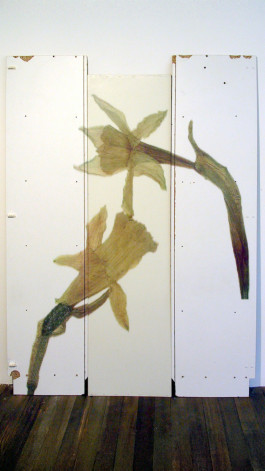
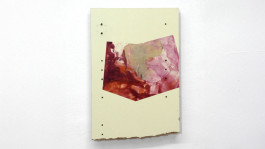
Rolf Graf processes these discarded image carriers by cleaning, painting, coating, applying salves and sticking things to them. What he adds in the form of oil paint, wax and varnish delineates what has been left open. What is applied, such as charcoal, defines the remaining emptiness.
What remains of the images formerly displayed on these extinguished surfaces? Does the display show the wax in the Wunderblock** at these newly defined points?
These screens, on which countless images have appeared, none of which remain, are processed by Rolf Graf in such a way that they themselves become an image, one that finally remains.
* The expression 'es nimmt mich wunder' (Swiss German for 'I am curious/it amazes me'). The noun Wunder originally referred to amazement itself or something that causes amazement.
** A Wunderblock is a writing implement from around 1900 that was used as a children's toy and notepad.